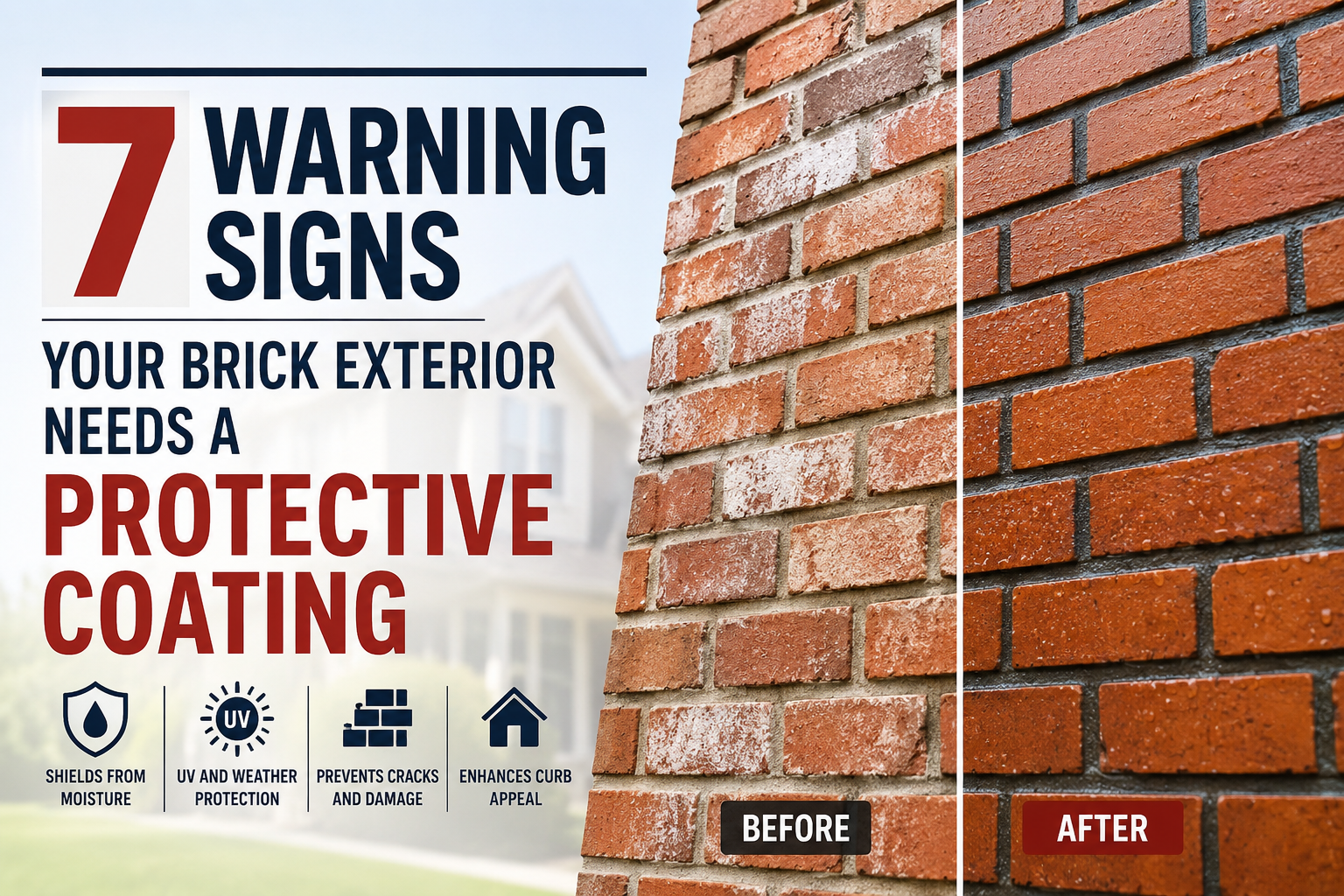

Brick is one of the most durable exterior building materials, but it isn’t maintenance-free. Over time, rain, humidity, UV exposure, freeze-thaw cycles, pollution, and moisture can slowly weaken brick and mortar. If these issues are ignored, they may lead to costly repairs that could have been prevented with the right protection.
An exterior brick coating helps shield brick surfaces from water penetration, weather damage, mold growth, fading, and premature deterioration while maintaining the building’s appearance.
But how do you know when it’s time to apply one?
This guide explains the seven warning signs your brick exterior needs a protective coating and what homeowners should do before minor issues become major repairs.
An exterior brick coating is a specially formulated protective finish applied to brick surfaces to reduce water absorption while allowing trapped moisture inside the wall to escape.
Unlike ordinary paint, many modern masonry coatings are breathable, helping protect bricks without sealing moisture inside the wall.
Benefits include:
Many homeowners believe brick is naturally waterproof.
Brick is porous, meaning it absorbs water. During repeated wet and dry cycles, moisture slowly damages both bricks and mortar joints.
Without protection, brick can develop:
A quality exterior brick coating helps reduce these risks while preserving the appearance of your home.
One of the earliest warning signs is brick that remains damp hours—or even days—after rainfall.
Why does this happen?
The brick has become overly porous and is absorbing more water than it should.
Signs include:
Excess moisture can eventually reach interior walls and insulation.
Applying an exterior brick coating helps repel rainwater before it enters the masonry.
If you notice a white, chalky substance on your brick, it’s likely efflorescence.
What causes efflorescence?
Water dissolves natural salts inside the brick. As moisture evaporates, those salts remain on the surface.
While the white residue itself isn’t dangerous, it signals excessive moisture movement through the masonry.
Ignoring it allows water damage to continue beneath the surface.
Bricks often last much longer than the mortar holding them together.
Signs include:
Water entering damaged mortar accelerates structural deterioration.
Although damaged mortar may require repointing first, applying an exterior brick coating afterward helps protect repaired joints from future water intrusion.
Peeling exterior paint often indicates trapped moisture.
If brick cannot breathe properly, moisture builds behind coatings until they begin bubbling or peeling.
Common warning signs include:
Rather than repeatedly repainting, many homeowners switch to breathable masonry coatings specifically designed for brick.
Exterior brick damage often appears inside the home first.
Watch for:
When moisture penetrates brick, it can slowly travel into wall cavities.
An exterior inspection often reveals that deteriorating brick is allowing water inside.
Protective coatings reduce exterior water penetration before interior damage worsens.
Sunlight doesn’t only affect paint.
Years of UV exposure gradually fade brick color and weather the surface.
Look for:
Some modern exterior brick coating systems restore a cleaner appearance while providing long-term UV protection.
Hairline cracks might seem harmless.
However, every crack creates another path for water.
Once moisture enters, temperature changes cause expansion and contraction that gradually widens the damage.
Signs include:
Early protection helps reduce additional moisture intrusion and may slow further deterioration after necessary repairs are completed.
Many homeowners wonder whether paint offers the same protection as masonry coatings.
| Feature | Exterior Brick Coating | Standard Exterior Paint |
| Water Resistance | Excellent | Moderate |
| Breathability | High | Often Low |
| UV Protection | Excellent | Good |
| Moisture Escape | Yes | Limited |
| Designed for Brick | Yes | Not Always |
| Lifespan | Longer | Usually Shorter |
| Helps Prevent Efflorescence | Yes | Often No |
While both improve appearance, coatings designed specifically for masonry generally provide better long-term protection.
Delaying repairs may lead to:
The longer moisture remains inside masonry, the more extensive the repairs typically become.
Professional contractors usually recommend applying coatings when:
Proper surface preparation is just as important as choosing the right coating.
Not always.
Before coating, contractors should inspect the masonry for:
Any underlying issues should be repaired first. Applying a coating over damaged masonry can trap existing problems instead of solving them.
The lifespan depends on several factors, including:
A professionally applied, high-quality breathable masonry coating can often provide protection for many years when properly maintained. Regular inspections and prompt repair of any developing cracks or mortar damage can help maximize its service life.
Routine maintenance helps your coating and masonry last longer.
Consider these best practices:
Preventive care is almost always less expensive than major masonry repairs.
Brick is built to last, but even the strongest masonry can suffer when exposed to years of moisture and changing weather conditions. Recognizing the early warning signs such as persistent dampness, efflorescence, crumbling mortar, peeling coatings, interior moisture, fading, or expanding cracks allows homeowners to act before small issues become expensive structural repairs.
A high-quality exterior brick coating provides an added layer of defense by reducing water penetration, resisting UV exposure, and helping maintain the beauty and durability of your home’s exterior. Combined with regular inspections and timely maintenance, it can significantly extend the life of your brickwork and protect your investment for years to come.
Most quality masonry coatings are water-resistant rather than completely waterproof. They repel rain while remaining breathable, allowing trapped moisture vapor to escape.
It depends on the condition of the existing paint. Loose, peeling, or failing paint usually needs to be removed, and the surface should be evaluated before applying a masonry coating.
Some coatings are clear and preserve the natural brick look, while others are pigmented to refresh or change the color. The right choice depends on your aesthetic goals and the condition of the masonry.
A visual inspection at least once a year and after severe storms is recommended to catch early signs of moisture damage, cracking, or mortar deterioration.