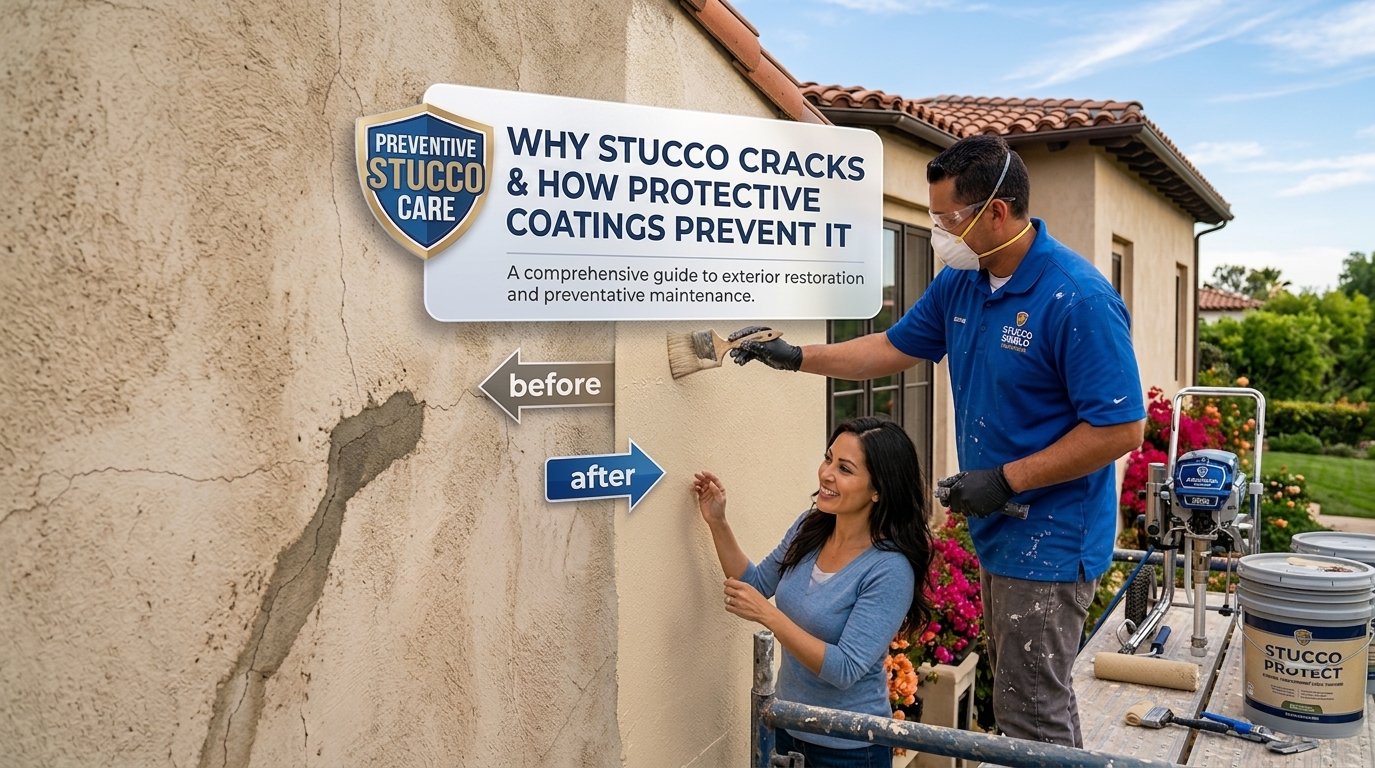

Stucco is a popular exterior finish because it is durable, attractive, and capable of protecting walls from everyday weather exposure. But even well-installed stucco can eventually develop cracks.
Small cracks may seem harmless at first, but they can allow moisture to penetrate the stucco system and contribute to staining, deterioration, and more extensive damage.
So, why does stucco crack, and can an exterior stucco coating help prevent it?
The short answer is yes. A properly selected exterior stucco coating can help protect stucco from moisture, weather exposure, and surface deterioration while improving the appearance of the exterior.
Stucco cracks for several different reasons. Some are related to normal movement, while others can indicate installation or moisture problems.
The most common causes include:
Not every crack has the same meaning. Hairline surface cracks may be relatively minor, while wide, recurring, or rapidly growing cracks may require professional evaluation.
A crack creates an opening in the protective exterior surface.
Once moisture gets behind or into the stucco system, the problem may become more complicated. Persistent moisture can contribute to staining, deterioration of underlying materials, and other moisture-related issues.
That is why repairing visible cracks is important but crack repair alone may not provide complete long-term surface protection.
A protective coating can add another layer of defense over properly prepared and repaired stucco.
An exterior stucco coating is a protective finish designed for use on stucco and other masonry surfaces.
Depending on the coating system, it may help:
The coating should be viewed as part of a complete stucco maintenance strategy rather than a substitute for repairing serious structural or substrate problems.
A quality protective coating can help reduce the environmental stresses that contribute to stucco deterioration.
1. It Helps Limit Moisture Intrusion
Moisture is one of the biggest concerns for exterior stucco.
A suitable coating can create a protective barrier that helps reduce the amount of water reaching the stucco surface and underlying materials.
This is especially valuable on walls exposed to heavy rain, humidity, or repeated wetting.
2. It Protects Against Weathering
Stucco remains exposed to sunlight, rain, wind, temperature changes, and airborne contaminants.
Over time, these conditions can cause the surface to weather and lose some of its protective qualities.
An exterior stucco coating can provide an additional protective layer against everyday environmental exposure.
3. It Helps Protect Repaired Surfaces
Crack repair is an important first step.
However, repaired areas can remain vulnerable to future weather exposure. Applying an appropriate coating over properly prepared stucco can help protect the repaired surface and create a more consistent exterior finish.
4. It Can Improve Surface Uniformity
Older stucco may contain patches, discoloration, and visible repairs.
A coating can help create a more uniform appearance while providing an additional layer of surface protection.
These two approaches are related, but they solve different problems.
| Stucco Repair | Exterior Stucco Coating |
| Addresses existing cracks or damaged areas | Provides additional surface protection |
| Focuses on localized problems | Can protect larger exterior surfaces |
| May be necessary before coating | Usually works best over properly prepared stucco |
| Restores damaged sections | Helps defend against weather and moisture |
| Does not necessarily protect the entire wall | Can provide broader protective coverage |
The best approach is often repair first, then protect.
If cracks are active, structural, or caused by underlying movement or moisture problems, those issues should be addressed before applying a coating.
No exterior coating can guarantee that stucco will never crack.
Buildings move. Temperatures change. Severe weather occurs. Structural or substrate problems can also cause cracks that a surface coating cannot correct.
However, a properly selected and professionally applied coating can help reduce moisture exposure and protect the stucco surface from environmental deterioration.
The coating works best when combined with proper installation, maintenance, drainage, and timely crack repair.
Consider an exterior stucco coating when your stucco is:
Before coating, the surface should be inspected and properly prepared.
Loose material, dirt, failing coatings, and significant cracks should not simply be covered up.
Proper preparation can have a major impact on coating performance.
A typical preparation process may include:
The exact preparation method depends on the condition of the stucco and the coating system being used.
Not every exterior coating is appropriate for every stucco surface.
When choosing a protective coating, consider:
The goal is not simply to choose the thickest or most waterproof product. The coating should be compatible with the stucco system and the building’s specific conditions.
Not every crack requires the same response.
Minor hairline cracks:
These may be surface-level and should be monitored and properly addressed as part of routine maintenance.
Wider or recurring cracks:
These may indicate movement, moisture problems, or other underlying issues and deserve closer inspection.
Large cracks, bulging, loose stucco, or significant deterioration:
These can indicate more serious problems and should be evaluated by a qualified professional before coating.
Preventive maintenance is usually easier than waiting for small problems to become major repairs.
A good stucco maintenance routine includes:
Stucco cracks because exterior walls experience constant environmental stress. Temperature fluctuations, moisture, building movement, poor installation, and physical damage can all contribute to cracking.
While an exterior stucco coating cannot eliminate every possible cause of cracking, it can provide an important layer of protection against moisture and weather exposure.
For the best results, think of stucco protection as a complete system: inspect the surface, repair existing damage, address moisture sources, properly prepare the stucco, and then apply a compatible protective coating.
When properly maintained, a protected stucco exterior can stay attractive and perform better against the elements for years to come.
Stucco can crack because of temperature changes, moisture exposure, building movement, improper installation, poor drainage, freeze-thaw cycles, or physical impact. Small hairline cracks can occur naturally, while larger or recurring cracks may indicate an underlying problem.
An exterior stucco coating cannot guarantee that stucco will never crack. However, a suitable protective coating can help reduce moisture exposure, protect against weathering, and improve the durability of the stucco surface.
A properly selected and applied stucco coating can help reduce water penetration through the coated surface. However, it should not be used to hide active leaks, serious cracks, or underlying moisture problems.
Yes. Existing cracks and damaged areas should generally be properly repaired and prepared before applying a protective coating. Coating over significant damage may only conceal the problem rather than solve it.
The best coating depends on the stucco system, climate, surface condition, and desired level of protection. Look for a product specifically designed or approved for stucco and exterior masonry, with appropriate weather and moisture resistance.