
Wood adds warmth, beauty, and value to any property. Whether it’s siding, decks, fences, pergolas, or log homes, protecting exterior wood is essential to keep it looking great and lasting for decades.
One of the most common questions homeowners ask is:
How long does exterior wood coating really last?
The honest answer is that it depends on several factors. Climate, sun exposure, moisture, wood species, product quality, and maintenance all affect the lifespan of a coating. While some products may require reapplication every few years, premium lifetime wood coating systems can provide protection for much longer with proper care.
This guide explains what influences coating longevity, realistic expectations, and how to maximize the life of your investment.
What Determines How Long Exterior Wood Coating Lasts?
Several factors work together to determine coating lifespan.
1. Sun Exposure
UV rays are one of wood’s biggest enemies.
Constant sunlight can:
South-facing walls and decks often require maintenance sooner than shaded areas.
2. Moisture Exposure
Rain, snow, humidity, and standing water slowly wear away coatings.
Moisture can lead to:
High-quality coatings repel water much more effectively.
3. Wood Species
Some woods naturally resist weather better than others.
Long-lasting woods include:
Softwoods may require more frequent maintenance unless properly coated.
4. Climate
Your local weather has a major impact.
Harsh climates include:
The harsher the environment, the faster coatings typically wear.
5. Surface Preparation
Even the best coating cannot compensate for poor preparation.
Proper prep includes:
A well-prepared surface dramatically improves coating longevity.
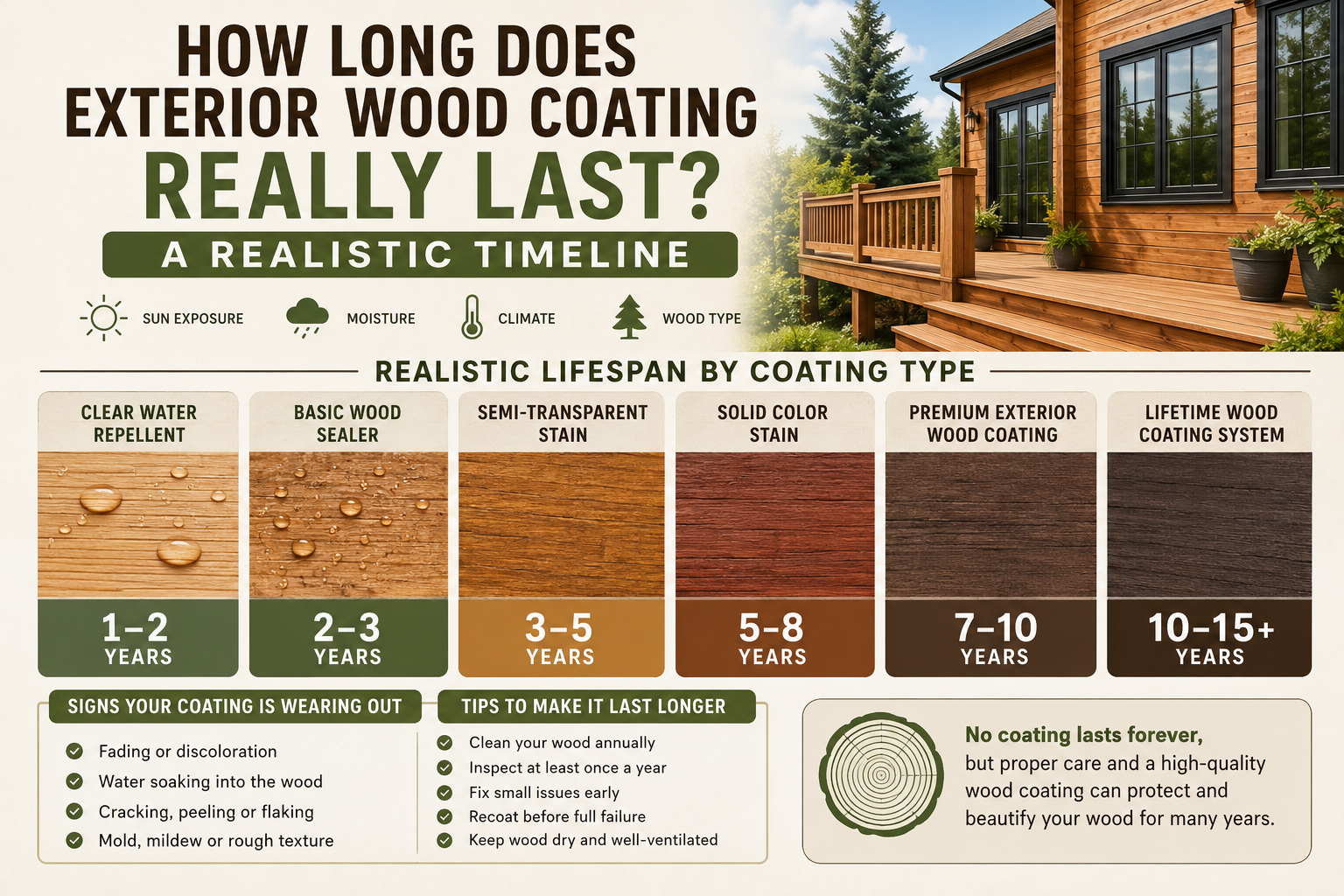
Realistic Lifespan by Coating Type
Here’s what homeowners can generally expect.
| Coating Type | Average Lifespan |
| Clear Water Repellent | 1–2 years |
| Basic Wood Sealer | 2–3 years |
| Semi-Transparent Stain | 3–5 years |
| Solid Color Stain | 5–8 years |
| Premium Exterior Wood Coating | 7–10 years |
| Lifetime Wood Coating System | 10–15+ years |
These are average estimates and vary depending on weather and maintenance.
Lifetime Wood Coating vs Regular Wood Sealer
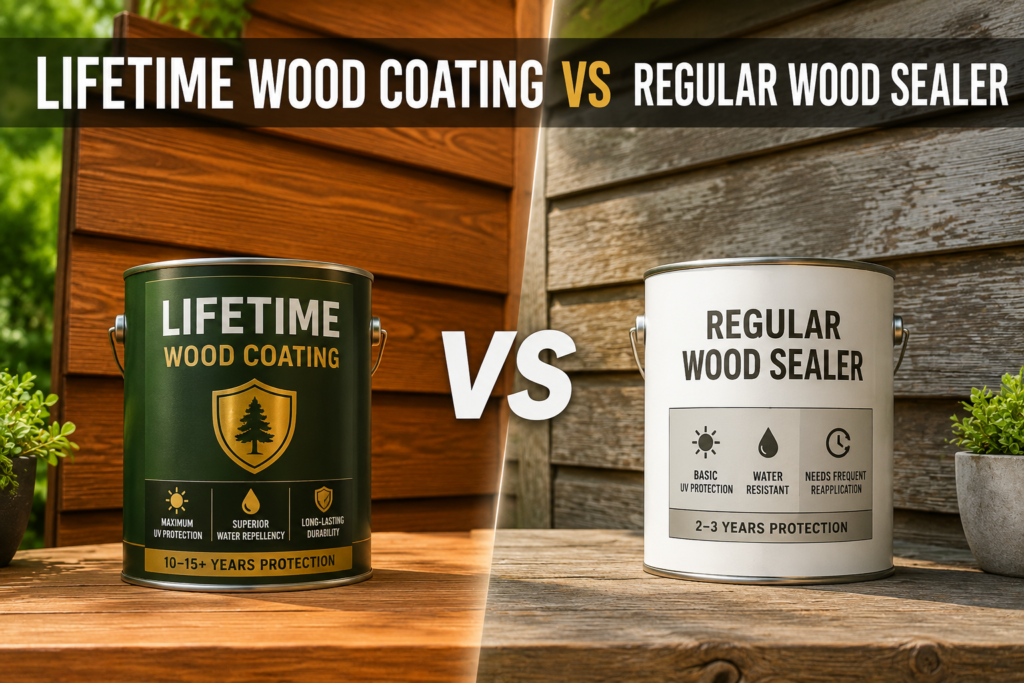
Many homeowners wonder if upgrading is worth the investment.
| Lifetime Wood Coating | Regular Wood Sealer |
| Longer lifespan | Shorter lifespan |
| Better UV protection | Limited UV resistance |
| Superior moisture resistance | Moderate water protection |
| Fewer maintenance cycles | Frequent reapplication |
| Greater color stability | Faster fading |
| Better long-term value | Lower upfront cost |
For homeowners planning to stay in their homes for years, premium lifetime coatings often provide better long-term value.
How Do You Know Your Wood Coating Is Wearing Out?
Your wood usually gives warning signs before complete failure.
Watch for:
Addressing these early can prevent expensive wood repairs.
How Often Should Exterior Wood Be Inspected?
Experts recommend inspecting coated wood at least once a year.
Pay special attention to:
Annual inspections help catch minor problems before they become major repairs.
Can Maintenance Extend the Life of Exterior Wood Coating?
Yes.
Simple maintenance can add years to the life of your coating.
Recommended maintenance includes:
Preventive maintenance is much less expensive than complete refinishing.
What Causes Wood Coatings to Fail Early?
Premature failure often happens because of installation or maintenance issues rather than product quality.
Common causes include:
Avoiding these mistakes helps maximize coating performance.
Is One Thick Coat Better Than Two Thin Coats?
Generally, two properly applied thin coats perform better than one thick coat.
Benefits include:
Always follow the manufacturer’s application recommendations.
Can Exterior Wood Coating Prevent Rot?
A quality coating helps reduce the risk of rot but cannot eliminate it entirely.
Wood rot occurs when moisture remains trapped for extended periods.
A premium coating helps by:
Proper drainage and ventilation are still essential.
Does Climate Change the Maintenance Schedule?
Absolutely.
Dry, Sunny Climates
Expect:
Wet Climates
Expect:
Coastal Areas
Expect:
Your local environment should guide your maintenance schedule.
Tips for Getting the Longest Life from Exterior Wood Coating
To protect your investment:
These simple practices can significantly extend the life of both the coating and the wood itself.
Final Thoughts
So, how long does exterior wood coating really last? While there isn’t a one-size-fits-all answer, most products provide 2 to 15+ years of protection, depending on the coating type, climate, surface preparation, and ongoing maintenance.
If you’re looking for the longest-lasting solution, investing in a premium lifetime wood coating system can reduce maintenance, improve durability, and help preserve the natural beauty of your exterior wood for many years. Regular inspections and timely upkeep remain the key to getting the maximum return on your investment.