

Wood is constantly exposed to sunlight, moisture, temperature changes, mold, and insects. Without the right protection, even high-quality wood can crack, fade, warp, or rot over time. Many homeowners wonder whether a Lifetime Wood Coating is worth the investment or if a traditional wood sealer provides enough protection.
The answer depends on how long you want your wood to last, how much maintenance you’re willing to perform, and the environment your wood is exposed to.
This guide compares Lifetime Wood Coating vs. regular wood sealer, explains how each product performs, and helps you choose the best option for your home or commercial property.
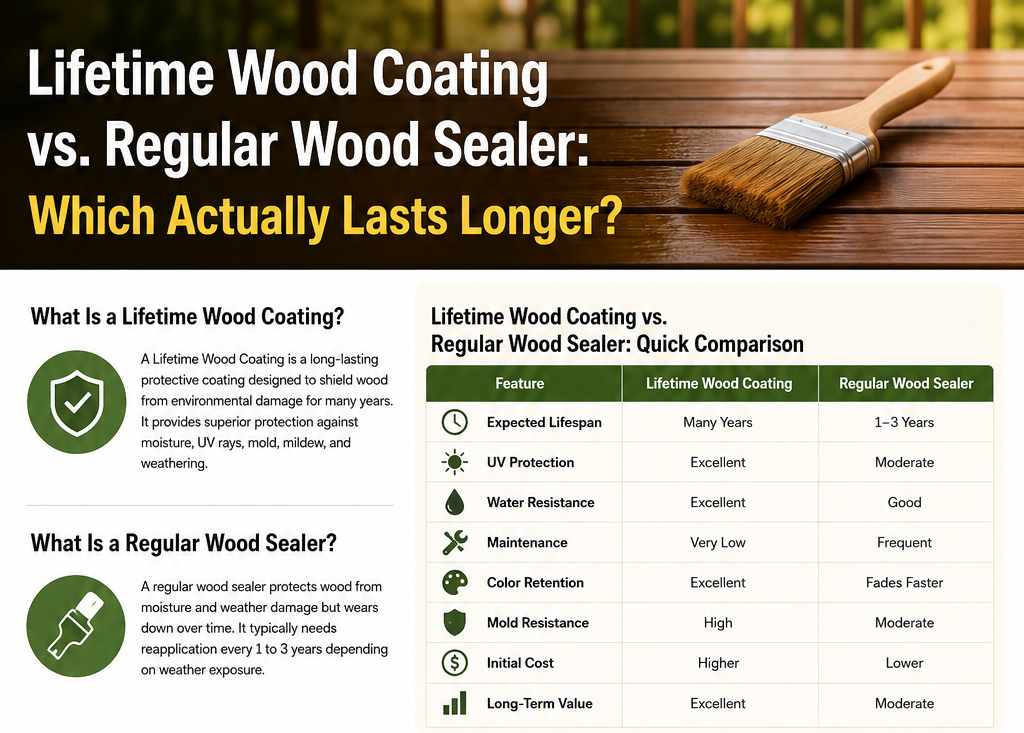
A Lifetime Wood Coating is a long-lasting protective coating designed to shield wood from environmental damage for many years. Unlike standard sealers that often require frequent reapplication, lifetime coatings are formulated to provide extended protection against moisture, UV rays, mold, mildew, and weathering.
Many premium lifetime coatings also penetrate deeply into the wood while creating a durable protective barrier on the surface.
Common benefits include:
Because they last significantly longer, homeowners often spend less on maintenance over the life of the wood.
A regular wood sealer is a protective product designed to reduce moisture absorption and slow down weather damage. It works well for basic protection but generally requires more frequent maintenance.
Most standard sealers need reapplication every one to three years depending on weather exposure.
Regular sealers are commonly used for:
While effective in the short term, they gradually wear away under sunlight and heavy rain.
| Feature | Lifetime Wood Coating | Regular Wood Sealer |
| Expected lifespan | Many years | 1–3 years |
| UV protection | Excellent | Moderate |
| Water resistance | Excellent | Good |
| Maintenance | Very low | Frequent |
| Color retention | Excellent | Fades faster |
| Mold resistance | High | Moderate |
| Initial cost | Higher | Lower |
| Long-term value | Excellent | Moderate |
The biggest difference isn’t simply the purchase price it’s how often you’ll need to maintain your wood over time.
Lifetime Wood Coating lasts considerably longer than a regular wood sealer.
High-quality lifetime coatings are engineered to resist weathering, UV degradation, and moisture penetration far better than traditional sealers.
Regular sealers gradually break down because:
A premium lifetime coating is formulated to withstand these challenges much longer, reducing the need for frequent recoating.
Sunlight is one of the biggest causes of wood deterioration.
Without proper UV protection, wood may experience:
A Lifetime Wood Coating typically contains advanced UV inhibitors that help preserve both the wood and its original appearance for a longer period.
Regular sealers often provide some UV protection but lose effectiveness much sooner.
Moisture is another major cause of wood damage.
When water penetrates wood, it can lead to:
Lifetime coatings usually create a stronger moisture barrier while still allowing the wood to breathe.
Regular sealers slow water absorption but eventually wear away, allowing moisture to penetrate unless they are reapplied regularly.
One of the biggest advantages of a Lifetime Wood Coating is reduced maintenance.
Lifetime Wood Coating
Regular Wood Sealer
If you want less maintenance, a lifetime coating is usually the better choice.
Many homeowners hesitate because lifetime coatings cost more upfront.
However, it’s important to compare the total cost over several years.
With regular wood sealers, you may repeatedly pay for:
A Lifetime Wood Coating often reduces these recurring expenses, making it more cost-effective in the long run.
Lifetime coatings work particularly well on wood surfaces exposed to harsh outdoor conditions.
They are commonly used for:
These surfaces benefit from long-lasting protection because they face constant exposure to weather.
A regular wood sealer can still be suitable when:
For smaller DIY projects, traditional sealers may provide adequate protection.
If your current finish is failing, your wood may show signs such as:
These are indicators that a stronger protective solution, such as a Lifetime Wood Coating, may help extend the life of the wood.
Regardless of which product you choose, proper maintenance improves performance.
Best practices include:
Proper application often has as much impact on performance as the coating itself.
When comparing Lifetime Wood Coating vs. regular wood sealer, the longer-lasting option is generally the Lifetime Wood Coating. It offers superior resistance to moisture, UV damage, fading, and weathering while reducing the need for frequent maintenance.
Although regular wood sealers remain a practical option for budget-conscious projects or lightly exposed wood, they require more frequent upkeep and shorter maintenance cycles.
If your goal is to protect valuable wood siding, decks, fences, or exterior structures for years with fewer maintenance headaches, investing in a quality Lifetime Wood Coating can provide stronger long-term performance and better overall value.
No. “Lifetime” is generally a marketing term that refers to significantly longer-lasting performance than traditional sealers. Actual lifespan depends on the product, climate, application quality, and ongoing maintenance.
Sometimes. The existing finish often needs to be cleaned, stripped, or prepared according to the coating manufacturer’s instructions before application.
For heavily exposed decks, a Lifetime Wood Coating generally offers better long-term protection because decks experience constant sun, rain, and foot traffic.
No coating can guarantee complete prevention of wood rot. However, high-quality lifetime coatings greatly reduce moisture penetration, lowering the risk when applied and maintained correctly.
Initially, yes. However, repeated maintenance and reapplication can increase the overall cost over time.