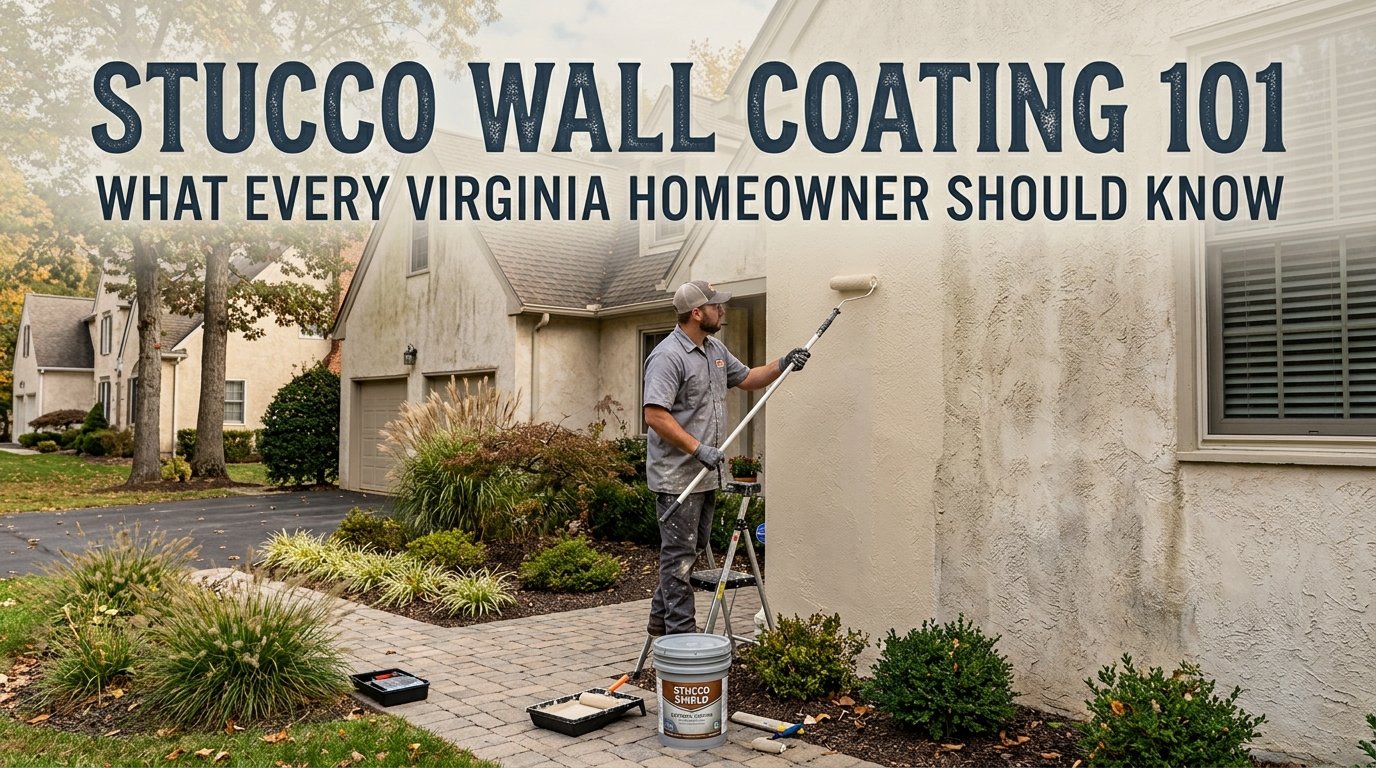

Stucco is a popular exterior finish for Virginia homes because it offers a clean, attractive appearance and can provide a durable layer of protection. But Virginia homeowners also have to deal with rain, humidity, freezing temperatures, temperature changes, and seasonal moisture that can affect stucco over time.
That is where stucco wall coating can help.
A quality exterior coating can add another layer of protection while helping maintain the appearance and performance of stucco. But what exactly is stucco coating, when should you use it, and how is it different from paint or a traditional sealer?
Here is what Virginia homeowners should know.
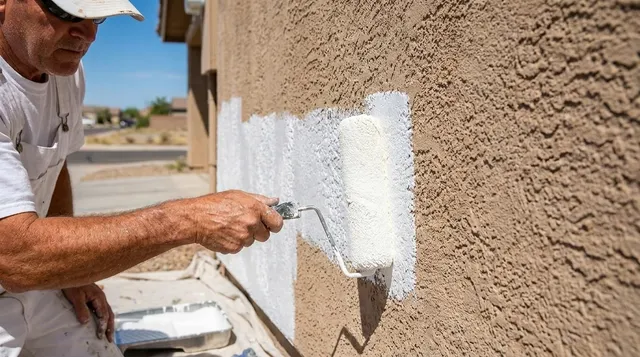
Stucco wall coating is a protective exterior coating designed to cover and protect stucco surfaces from moisture, weather exposure, and everyday environmental wear.
Unlike ordinary interior paint, an exterior stucco coating is designed for demanding outdoor conditions. Depending on the product, a coating may help reduce water penetration while allowing the wall system to manage moisture appropriately.
For homeowners, the goal is simple: protect the stucco while keeping the exterior looking attractive.
Virginia’s climate can be challenging for exterior walls.
Homes may experience:
Repeated exposure can gradually contribute to fading, surface deterioration, staining, cracking, or moisture-related problems.
A protective coating can help reduce the impact of these environmental conditions when the stucco is properly prepared and the coating is correctly applied.
A properly selected and applied stucco coating can help reduce water absorption and protect the exterior surface from weather exposure.
However, coating should not be treated as a cure for an existing structural moisture problem.
If your stucco has significant cracks, damaged areas, failed joints, or signs of water intrusion, those issues should be evaluated and repaired before coating.
A coating works best as part of a broader exterior maintenance strategy—not as a replacement for necessary repairs.
Stucco coating can provide several practical benefits for Virginia homeowners.
1. Better Weather Protection
A quality exterior coating can create an additional protective layer against rain, sunlight, and changing weather conditions.
2. Improved Appearance
Coating can refresh an aging stucco exterior and provide a more consistent finish.
3. Reduced Moisture Absorption
Some coatings are formulated to reduce the amount of water absorbed by the exterior surface.
4. Longer-Lasting Exterior
By protecting the surface from environmental exposure, a suitable coating may help reduce premature exterior deterioration.
5. Easier Maintenance
A properly coated surface may be easier to maintain and keep looking clean and uniform.
Stucco coating and regular exterior paint are not necessarily the same thing.
| Stucco Wall Coating | Regular Exterior Paint |
| Designed specifically for exterior masonry or stucco applications | General-purpose exterior finish |
| May provide additional moisture resistance | Primarily designed for color and surface appearance |
| Can be formulated for textured masonry surfaces | May not be optimized for stucco |
| Focuses on protection as well as appearance | Often focuses more heavily on appearance |
| Product selection depends on the stucco system and conditions | Available in many general exterior formulations |
The right choice depends on the condition of your stucco, the type of existing finish, moisture conditions, and the manufacturer’s specifications.
Bottom line: If your primary goal is long-term exterior protection, look beyond color and choose a coating specifically appropriate for stucco and masonry.
There is no single calendar date that works for every Virginia home.
Instead, consider coating when:
The condition of the wall should always be evaluated before coating.
You should not simply coat over significant stucco cracks without determining why they exist.
Small cosmetic imperfections may require a different treatment than large, recurring, or structural-looking cracks.
Before coating, inspect the surface for:
Repairing problems first gives the coating a better surface to bond to and helps prevent existing issues from being hidden underneath a new finish.
Proper preparation is one of the most important parts of a successful stucco coating project.
A typical preparation process may include:
Skipping preparation can reduce adhesion and shorten the useful life of the coating.
Small exterior maintenance projects may be suitable for experienced homeowners, but large stucco coating projects are often better handled by professionals.
Stucco is a textured masonry surface, and achieving consistent coverage can require the right equipment, preparation techniques, and product knowledge.
Professional application can be particularly valuable when:
The biggest mistake is treating stucco coating like painting a bedroom wall. Exterior masonry requires more attention to surface condition and application conditions.
The lifespan of a stucco coating depends on the product, surface preparation, application quality, climate, and ongoing maintenance.
Virginia’s changing weather can place considerable stress on exterior surfaces.
Instead of relying on a fixed number of years, homeowners should periodically inspect the exterior for:
Following the coating manufacturer’s maintenance recommendations can also help maximize performance.
When comparing products or contractors, focus on performance not just price or color.
Look for:
A cheaper coating is not necessarily the better value if it requires frequent repairs or replacement.
For homeowners who want to protect an existing stucco exterior, a properly selected coating can be a worthwhile preventative maintenance investment.
The value is not simply about making the house look newer. The bigger benefit is adding an appropriate protective layer while maintaining the exterior.
However, coating should come after addressing underlying stucco damage or moisture problems.
Stucco can be attractive and durable, but Virginia’s changing weather can gradually take a toll on exterior walls.
Stucco wall coating can help protect the surface from weather exposure, improve appearance, and support long-term exterior maintenance.
The key is choosing the right coating, preparing the stucco correctly, and addressing cracks or moisture problems before application. If your Virginia home’s stucco is looking worn, faded, cracked, or vulnerable to moisture, consider having the exterior evaluated before deciding whether a protective coating is the right solution.
Is your stucco looking faded, cracked, or weather-worn? A professional stucco coating can help protect your home’s exterior while giving it a fresh, durable finish.
Ready to protect your stucco? Contact us today to learn about your coating options and get started.