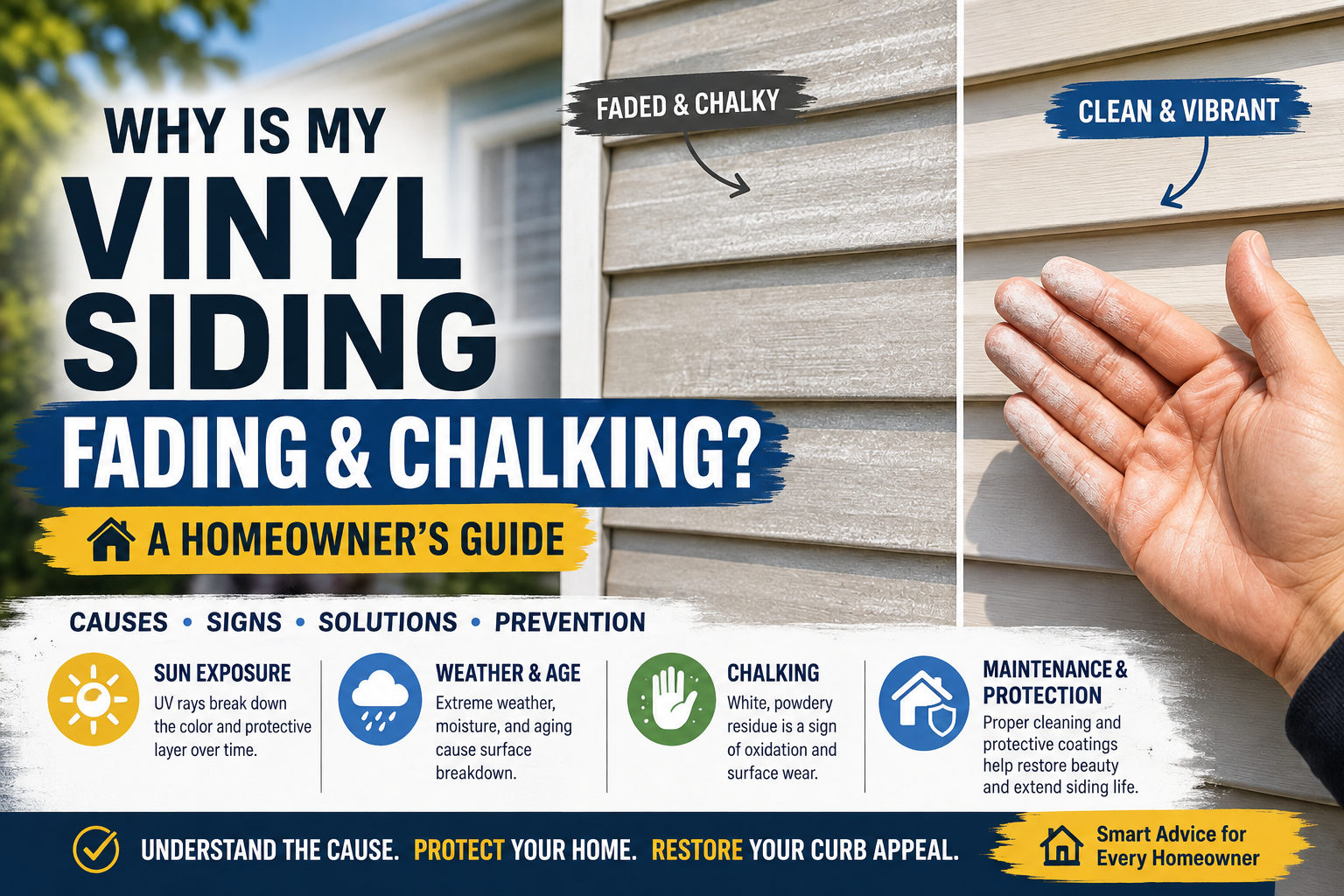

If your vinyl siding has started looking dull, faded, or covered in a white powder, you’re not alone. Many homeowners notice these signs after years of sun exposure and changing weather conditions. While vinyl siding is known for being durable and low maintenance, it isn’t completely immune to aging.
The good news? Fading and chalking don’t always mean you need to replace your siding. In many cases, understanding what’s happening can help you choose the right solution and extend the life of your home’s exterior.
This guide explains why vinyl siding fades, what chalking means, how to identify the problem, and what you can do to restore your home’s curb appeal.
Vinyl siding fading happens when the original color gradually becomes lighter or uneven over time.
The biggest cause is prolonged exposure to ultraviolet (UV) rays from the sun. As sunlight breaks down the pigments in the siding, the color slowly loses its richness.
Common signs of fading include:
Fading is usually cosmetic, but it can make your home appear much older than it actually is.
Chalking is the appearance of a white, powdery residue on the surface of vinyl siding.
If you rub your hand across the siding and a chalk-like powder sticks to your fingers, you’re experiencing chalking.
This happens because the outer layer of the siding slowly breaks down after years of weather exposure.
Chalking usually appears because of:
A small amount of chalking is normal as siding ages. Heavy chalking often indicates the protective surface has significantly deteriorated.
Several factors contribute to fading.
1. Constant Sun Exposure
UV rays are the number one reason vinyl siding loses color.
Homes in sunny climates experience faster fading than those in shaded areas.
2. Weather Extremes
Heat, freezing temperatures, rain, and snow all contribute to gradual wear.
Years of seasonal expansion and contraction affect the surface finish.
3. Poor Quality Materials
Lower-quality vinyl siding often contains fewer UV stabilizers, causing colors to fade much sooner.
Premium siding typically lasts much longer.
4. Dark Colors
Dark shades absorb more heat than lighter colors.
Because they retain more heat, they often fade faster.
5. Age
Even well-maintained siding eventually shows signs of aging after many years.
Chalking is usually a sign that the surface coating has broken down.
Common causes include:
As the protective layer deteriorates, tiny particles separate from the surface, creating the white residue homeowners notice.
Look for these warning signs:
If multiple symptoms appear together, your siding may benefit from restoration or protective treatment.
| Fading | Chalking |
| Loss of original color | White powder on surface |
| Mainly affects appearance | Indicates surface breakdown |
| Caused by UV damage | Caused by oxidation and aging |
| Usually develops slowly | Often appears after years of weather exposure |
| May occur without chalking | Frequently occurs alongside fading |
Understanding the difference helps determine whether simple cleaning is enough or if additional protection is needed.
Yes, depending on the condition.
Possible restoration options include:
Thorough Cleaning
Sometimes dirt, mildew, and oxidation make siding appear worse than it actually is.
Professional cleaning may restore some brightness.
Protective Coating
Many homeowners choose specialty exterior coatings designed for vinyl siding.
These coatings can:
Replacement
If siding has become cracked, warped, or structurally damaged, replacement may be the better long-term investment.
While no siding lasts forever, proper maintenance can slow the aging process.
Best practices include:
Regular maintenance helps preserve both appearance and performance.
Painting is possible, but it isn’t always the best solution.
Painting requires:
Improper painting may peel, crack, or trap heat, especially if darker colors are used.
Many homeowners choose specialized coatings because they are formulated specifically for exterior siding performance.
You should consider professional help if:
A professional inspection can determine whether cleaning, restoration, coating, or replacement is the most cost-effective option.
Vinyl siding fading and chalking are common signs of long-term weather exposure, especially on homes exposed to intense sunlight and changing climates. While these issues can make your home look older, they don’t always mean your siding has reached the end of its life. By recognizing the early signs, maintaining your siding regularly, and considering professional restoration or protective coatings when needed, you can improve curb appeal, protect your investment, and extend the life of your home’s exterior. If your siding has lost its color or leaves a chalky residue on your hands, now is the perfect time to inspect it and explore the most effective restoration options before the damage becomes more severe.
Not necessarily. If the siding is still structurally sound, cleaning or applying a protective coating may restore its appearance.
Chalking itself isn’t dangerous, but it indicates the surface has weathered and may need maintenance or protection.
Pressure washing may remove some surface residue, but excessive pressure can damage vinyl siding. Gentle cleaning methods are usually recommended.
Quality vinyl siding often lasts 20–40 years, depending on installation, climate, maintenance, and sun exposure.
A high-quality UV-resistant coating can significantly reduce future fading and help extend the appearance and lifespan of vinyl siding.