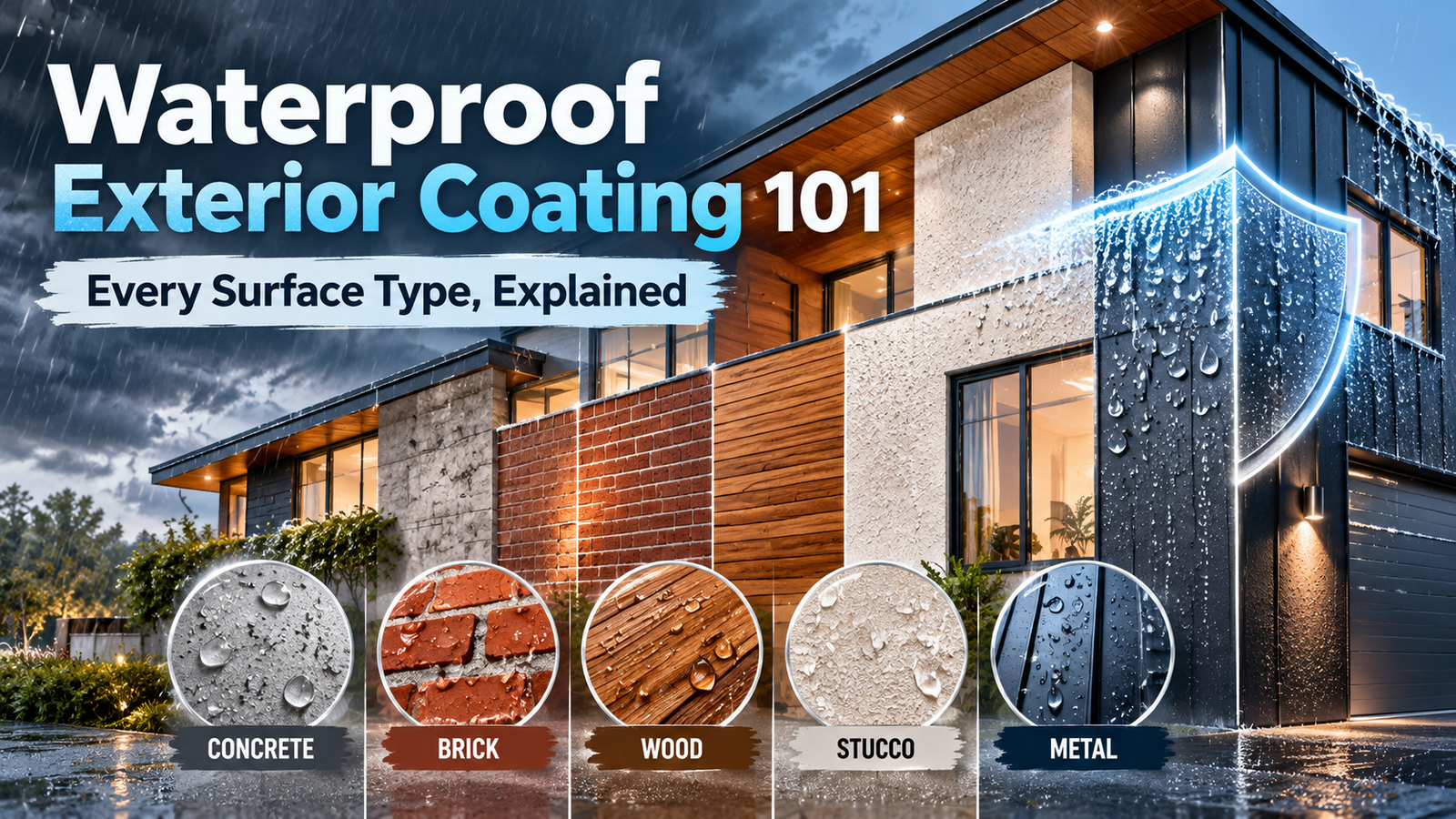

Rain, humidity, snow, and changing temperatures can gradually damage a building’s exterior. Water can seep into porous walls, cause paint to peel, encourage mold growth, corrode metal, and weaken materials over time. The right waterproof exterior coating helps protect exposed surfaces by reducing water penetration and improving resistance to weather.
However, not every coating works on every material. Concrete, brick, wood, stucco, and metal have different properties, so choosing the right product requires understanding the surface first.
In this guide, we’ll explain the main types of waterproof exterior coatings, which surfaces they suit, how they compare, and what to consider before applying one.
A waterproof exterior coating is a protective material applied to an outdoor surface to limit water penetration and protect the underlying substrate from moisture and weather exposure.
Depending on its formulation, the coating may form a continuous protective film, penetrate porous materials, or create a flexible membrane that accommodates minor surface movement.
Common benefits include:
Important: Waterproofing performance depends on the product, application thickness, surface preparation, and exposure conditions. A water-repellent coating is not necessarily a waterproof membrane, and neither automatically fixes structural cracks or active leaks.
Exterior surfaces face different moisture-related problems depending on their material and environment.
For example, concrete can absorb water through its pores, wood can swell and decay when moisture remains trapped, and unprotected steel can rust after repeated exposure to water.
Waterproof exterior coatings help address these risks when selected and applied correctly.
Here are common warning signs that a surface may need attention:
These symptoms can also indicate drainage, flashing, plumbing, or structural problems. Identify the underlying cause before applying a coating.
Different coating technologies offer different levels of flexibility, water resistance, breathability, and durability. The following options are among the most common.
1. Acrylic Waterproof Exterior Coating
Acrylic coatings are popular for exterior walls because many formulations offer good UV resistance, relatively easy application, and a range of decorative finishes.
They are commonly used on compatible stucco, masonry, concrete, and previously painted exterior surfaces.
Best for: Above-ground exterior walls exposed to rain and sunlight.
Key benefits:
Limitation: Standard acrylic exterior paint is not automatically a waterproofing membrane. Choose a product specifically rated for the intended waterproofing application.
2. Elastomeric Waterproof Coating
Elastomeric coatings are flexible, film-forming coatings designed to stretch and accommodate limited movement in suitable substrates.
They are often used on stucco, concrete block, and other compatible masonry surfaces where small, nonstructural hairline cracks may be present.
Best for: Suitable exterior masonry walls that experience minor movement and weather exposure.
Key benefits:
Limitation: Elastomeric coatings cannot repair structural cracks or correct water intrusion caused by faulty flashing, poor drainage, or failed joints. Some formulations may also trap moisture if applied over a damp or unsuitable substrate.
3. Silicone and Silane-Siloxane Water Repellents
These products are designed primarily to reduce water absorption in compatible porous materials. Depending on the chemistry, they may penetrate the substrate instead of forming a visible surface film.
They are useful when property owners want to preserve the natural appearance of brick, stone, or concrete.
Best for: Compatible brickwork, masonry, concrete, and certain stone surfaces.
Key benefits:
Limitation: Penetrating water repellents generally do not bridge cracks or stop water under pressure. Always confirm compatibility with the specific material.
4. Cementitious Waterproof Coating
Cementitious coatings use cement-based materials, sometimes modified with polymers, to form a protective layer over compatible concrete and masonry.
They are available in different formulations for different moisture conditions and applications.
Best for: Suitable concrete, concrete block, and cement-based masonry surfaces.
Key benefits:
Limitation: Rigid formulations may crack when the substrate moves. Exterior exposure, pressure conditions, and breathability requirements must be considered before choosing a product.
5. Polyurethane Waterproof Coating
Polyurethane coatings are used in specialized waterproofing systems where flexibility, abrasion resistance, or a seamless protective layer is needed.
Depending on the product, applications may include compatible roofs, terraces, exposed concrete, and other specified exterior surfaces.
Best for: Projects requiring a flexible membrane or a durable coating system approved for the particular exposure.
Key benefits:
Limitation: Not every polyurethane coating is UV-stable or suitable for permanent outdoor exposure. Follow the manufacturer’s requirements for primers, thickness, curing, and protective topcoats.
6. Bituminous and Rubberized Waterproof Coatings
Bituminous and rubberized products are commonly used in specialized waterproofing systems, particularly on foundations and other compatible surfaces exposed to soil moisture.
They can form a water-resistant or waterproof barrier when installed as part of an approved system.
Best for: Suitable below-grade foundation walls and specified concealed waterproofing applications.
Key benefits:
Limitation: Many products are not designed for exposed sunlight, decorative exterior walls, or pedestrian traffic. Some require protection boards, drainage layers, or additional waterproofing components.
The material you are protecting should determine the coating you select. A product that works well on porous brick may fail on painted wood or unprepared metal.
1. Concrete Surfaces
Concrete is strong but porous. Water can enter through pores, cracks, construction joints, and poorly sealed penetrations.
Recommended options: Compatible penetrating water repellents, masonry waterproof coatings, elastomeric wall coatings, or specialized membranes, depending on the application.
For above-ground concrete walls, a breathable water-repellent treatment may be appropriate. Below-grade foundations exposed to soil moisture may require a dedicated waterproofing membrane rather than ordinary exterior paint.
Real-life example: Imagine a concrete garden wall that darkens after every storm. If the concrete is structurally sound and the problem is surface absorption, a compatible penetrating repellent may help. If water is flowing through a crack, the crack and its cause must be addressed first.
2. Brick and Masonry
Brick and mortar can absorb rainwater, particularly when mortar joints are deteriorated or the wall is exposed to wind-driven rain.
Recommended options: Breathable silane-siloxane repellents, compatible masonry coatings, or specified cementitious products.
Choose a breathable treatment when preserving the brick’s natural appearance is important. If you want a colored finish, use a coating specifically formulated for the masonry and exposure.
Before application, inspect mortar joints, efflorescence, cracks, and previous coatings. Sealing a persistently damp brick wall without understanding the moisture source can worsen deterioration.
3. Stucco and Render
Stucco is a porous cement-based exterior finish. Cracks and poorly sealed transitions can allow water to reach underlying layers.
Recommended options: Compatible elastomeric coatings, breathable masonry coatings, or manufacturer-approved water repellents.
Elastomeric products can be useful where minor hairline cracking is present, provided the cracks fall within the product’s rated bridging capability.
Real-life example: A stucco home develops fine cracks near a window after several seasons of hot summers and cold winters. Before repainting, the owner should check the window flashing, repair appropriate cracks, and select a compatible exterior coating. Painting directly over unresolved water entry may only delay the next failure.
4. Exterior Wood and Timber
Wood absorbs moisture and changes dimension as humidity and temperature fluctuate. Excess moisture can lead to swelling, peeling finishes, and decay.
Recommended options: Exterior wood sealers, breathable water-repellent treatments, and wood-specific exterior paints or stains.
Look for products that provide the required water repellency and UV protection while remaining compatible with the timber and existing finish.
Important: Wood must be sufficiently dry before coating. Repair or replace rotten sections and investigate leaks around joints, end grain, and trim. Avoid applying an unsuitable impermeable coating that traps moisture within the wood.
5. Metal Surfaces
Exterior steel and iron are vulnerable to corrosion, especially where protective coatings are damaged.
Recommended options: Compatible anti-corrosion primers combined with exterior-grade protective topcoats, or specialized metal coating systems.
Preparation is essential. Remove rust and loose existing paint to the level specified by the coating manufacturer. Clean the metal, apply the correct primer, and observe the required film thickness and curing times.
Real-life example: A metal handrail beside an outdoor staircase develops rust around its joints. Applying another coat of ordinary paint over the rust may produce a short-lived cosmetic improvement. Removing corrosion, preparing the joints, and applying a compatible anti-corrosion system offers a more reliable solution.
6. Exterior Roofs and Terraces
Roofs and terraces face intense sunlight, temperature fluctuations, and potentially standing water. Their requirements differ from those of vertical walls.
Recommended options: Roof-rated acrylic, polyurethane, or other specialized liquid-applied waterproofing membranes, depending on the roof design and exposure.
Always check whether the product is approved for ponding water, foot traffic, the existing roof membrane, and the relevant substrate.
Ordinary wall paint should not be substituted for a roof waterproofing system.
7. Foundations and Below-Grade Walls
Foundation walls may face groundwater, soil moisture, and hydrostatic pressure. These conditions require a more specialized approach than protection from ordinary rainfall.
Recommended options: Purpose-designed below-grade waterproofing membranes and compatible detailing systems.
The correct system may also require drainage, protection boards, sealed penetrations, and appropriate site grading.
A decorative exterior wall coating is not a substitute for a foundation membrane rated for the actual moisture and pressure conditions.
These products serve related but different purposes. The right choice depends on whether you need a surface film, reduced absorption, or a dedicated waterproof barrier.
| Feature | Waterproof Exterior Coating | Water-Repellent Sealer |
| How it works | Often forms a protective film or membrane | Usually reduces water absorption, often by penetrating the surface |
| Appearance | May change color, texture, or sheen | Often preserves the natural appearance |
| Crack bridging | Some flexible products can bridge rated hairline cracks | Generally does not bridge cracks |
| Breathability | Varies by formulation | Many penetrating products allow water vapor to escape |
| Common applications | Coated masonry walls, specified roofs, waterproofing systems | Compatible brick, stone, concrete, and masonry |
| Main limitation | Can blister or peel if poorly matched or applied | Cannot usually stop active leaks or water under pressure |
Which should you choose? Use a dedicated coating or membrane when the project requires a continuous protective layer. Consider a penetrating water repellent when reducing rainwater absorption while maintaining the surface’s natural look is the main objective.
Neither option should be selected without checking the substrate, moisture source, and manufacturer’s performance claims.
Even a high-quality product can fail if the surface is poorly prepared or the coating is applied incorrectly.
Follow these general steps, adjusting them to the product’s technical instructions.
Never assume that adding extra coats will compensate for poor preparation or an unsuitable product.
Avoid these mistakes when selecting or applying a waterproof exterior coating:
Before buying a product, answer these five questions:
Read the product data sheet before purchasing. Confirm the approved substrates, surface preparation, application thickness, coverage, curing requirements, and maintenance recommendations.
For complex commercial buildings, large facades, persistent leaks, or below-grade waterproofing, consult a qualified waterproofing professional.
The best waterproof exterior coating is the one matched to your surface, moisture problem, and environmental conditions. Acrylic and elastomeric coatings may suit compatible exterior walls, penetrating repellents can help protect porous masonry, wood-specific treatments protect timber, and corrosion-resistant systems are essential for exposed steel.
The key is to diagnose the problem before applying the product. Prepare the surface properly, address the source of water, and follow the manufacturer’s instructions.
With the right coating system and regular maintenance, you can reduce moisture-related damage, protect exterior materials, and help extend the service life of your property.
Yes, certain waterproof coatings and membranes can prevent water penetration when correctly selected and installed. However, they may not stop leaks caused by structural cracks, damaged flashing, failed joints, or hydrostatic pressure. Identify and repair the underlying problem before applying a waterproofing system.
The best coating for concrete walls depends on whether the goal is to reduce rainwater absorption, bridge minor cracks, or create a continuous waterproof barrier. Penetrating water repellents can help reduce absorption, while compatible elastomeric coatings and specialized waterproofing membranes may provide additional protection for suitable applications.
Elastomeric paint is generally more flexible and thicker than standard exterior paint, making suitable formulations useful for protecting compatible masonry walls and bridging certain hairline cracks. Regular exterior paint primarily provides a decorative and weather-resistant finish. However, neither product should be assumed to provide complete waterproofing unless its specifications support that use.
Yes, waterproof coatings can be applied to compatible brick walls. Penetrating silane-siloxane water repellents can reduce water absorption while preserving the brick’s natural appearance. Film-forming masonry coatings are another option when a coated finish is desired. The product should allow appropriate moisture-vapor movement and be compatible with the brick and mortar.
The lifespan of a waterproof exterior coating varies according to its formulation, surface preparation, application quality, UV exposure, weather conditions, and maintenance. Some systems may require recoating after several years, while other specialized systems may last longer. Follow the manufacturer’s maintenance schedule and inspect exposed surfaces regularly for cracking, peeling, or loss of water repellency.